Medicinal Mushrooms A Free E-book Exploring the World of Medicinal Mushrooms This booklet provides a clear and concise overview of 16 well-known medicinal mushroom species. It explores findings from scientific and clinical studies alongside their traditional uses in natural medicine. Explore their traditional uses, bioactive compounds, and the scientific research exploring their potential properties and
Knowledge library
The scientific research and development work of MycoMedica d.o.o
Proprietary studies. Research and development projects. Scientific publications. Bioactive compound analyses.
Explore the science behind GOBA® products.
Research Highlights
Studies
Fungal extracts influence lifespan and immune responses in the Carniolan honey bee
The aim of this study was to determine the effect of four different fungal extracts (Ganoderma lucidum - GL, Hericium erinaceus - HE, Inonotus obliquus - IO, and Trametes versicolor - TV) on the survival rate, activities of metabolic markers (ALP, ALT, and AST) and antioxidant enzyme activities (CAT, GPx, GST, and SOD), and TAC levels in A. m. carnica.
Read more
Studies
Cordycepin as a potential pharmacological inhibitor of pro-fibrotic pathways in systemic sclerosis
In the presented study, the authors examined the effects of cordycepin on fibrotic processes in systemic sclerosis – a rare autoimmune disease characterized by excessive accumulation of connective tissue in the skin and lungs.
Read moreMeet the experts
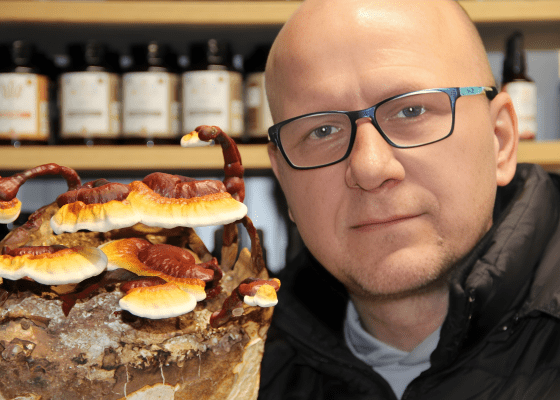
Asst. Prof.. Andrej Gregori, PhD
Asst.Prof. Andrej Gregori is a doctor of biotechnology, graduated as an agronomist at the Biotechnical Faculty of the University of Ljubljana (2004, agronomy; PhD 2010, biotechnology). He teaches as an assistant professor at the same faculty and is an active researcher in the field of mycobiology and cultivation of medicinal mushrooms. He is considered one of the leading Slovenian experts in medicinal fungi and mushrooms. In addition to academic contributions, he has published several dozen scientific works in the field of mycology, mushroom cultivation and extracts. As a lecturer, he is an established expert at home and abroad.
Read moreMycoMedica research
Calprotectin is a Mn, Ca and Zn-binding protein of the S100-group which has many functions in the cell. It is a major constituent (60% of the soluble ingredients and 5% of the total proteins) of the cytoplasm of neutrophil granulocytes, as well as monocytes and epithelial cells. During inflammation, the leukocytes migrate through the intestinal
The study was co-funded by: The growth of oyster mushroom (Pleurotus ostreatus) on pulp and paper industry wastes was studied. Specifically, the question was investigated whether solid- state fermentation of P. ostreatus on paper-mill deinking sludge and primary sludge substrates is appropriate for production of enzymes, relevant to the pulp and paper industry. Following
Disposal of waste sludges produced in large amounts in the pulp and paper industry imposes significant environmental and economical problems. One strategy to address these issues involves revalorization of paper mill sludges by their application as substrates for microbial production of biotechnologically relevant enzymes. The application of lignocellulolytic enzymes in paper, textile and bioenergy industries is encouraged in order to decrease chemicals and energy consumptions. In
Six Monascus purpureus (red mould) strains were cultivated on brown rice and millet as substrates. They underwent strain selection for high lovastatin and pigment production, and low citrinin mycotoxin production, with particular reference to potential for millet as substrate. For most of these strains, substrate dry matter loss was 54–60% on rice and 46–48% on
The study “Culture Degeneration Reduces Sex-Related Gene Expression, Alters Metabolite Production and Reduces Insect Pathogenic Response in Cordyceps militaris” investigates how long-term laboratory subculturing of Cordyceps militaris affects its biological activity, metabolism, and ability to produce important bioactive compounds. The researchers found that repeated subcultivation on artificial media gradually led to culture degeneration. Degenerated cultures
The review study Cultivation Technologies for Production of Medicinal Mushroom Biomass: Review highlights that medicinal mushrooms represent an important source of bioactive compounds with significant potential for use in food supplements, functional foods, veterinary applications, and the pharmaceutical industry. Due to the growing interest in medicinal mushrooms, researchers are increasingly developing various cultivation technologies that
The findings of the study demonstrate the impact of low-intensity laser and quasi-monochromatic light on the biosynthetic activity of the edible medicinal fungus L. edodes during submerged cultivation. An artificial lighting installation based on matrices of light-emitting diodes (LED) emitting light at 470 nm (blue), 530 nm (green), 650 nm (red), and argon gas laser (488 nm) was used.
The present study aimed to examine the biological activity and cardioprotective potential of Trametes versicolor heteropolysaccharides (TVH) in a rat model of metabolic syndrome (MetS). This study included 40 Wistar rats divided into 5 groups: CTRL—healthy non-treated rats; MetS—non- treated rats; and H-TV, M-TV and L-TV-rats with MetS treated with either 300, 200 or 100