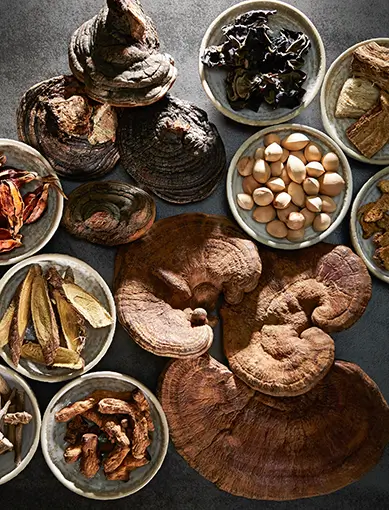
The review study Cultivation Technologies for Production of Medicinal Mushroom Biomass: Review highlights that medicinal mushrooms represent an important source of bioactive compounds with significant potential for use in food supplements, functional foods, veterinary applications, and the pharmaceutical industry. Due to the growing interest in medicinal mushrooms, researchers are increasingly developing various cultivation technologies that enable safe, efficient, and high-quality production of fungal biomass.
As many medicinal mushroom species are rare in nature or grow very slowly, modern production mainly relies on controlled cultivation methods. Traditional cultivation of fruiting bodies on wooden logs is still considered a natural and cost-effective production method; however, it is also highly time-consuming, as cultivation of some species may take several years.
The study particularly emphasizes the development of more advanced cultivation methods using sawdust-based substrates, sterilized bags, bottles, and controlled growing systems, which allow faster and more standardized production of mushroom fruiting bodies. These technologies provide better control over growing conditions, reduce the risk of contamination, and ensure more consistent product quality.
An important area of development is also the biotechnological cultivation of mushroom mycelium in bioreactors, where fungi are grown in liquid media or on solid substrates under strictly controlled conditions. According to the researchers, these technologies enable rapid biomass production, precise control of the cultivation process, and the possibility of influencing the production of specific bioactive compounds.
The authors conclude that each cultivation method offers distinct advantages. Traditional cultivation remains closer to the natural growth process of the mushroom, while modern biotechnological approaches allow faster production and greater consistency in quality. The combination of traditional knowledge and advanced biotechnology is therefore considered one of the key directions in the future development of medicinal mushroom cultivation.