Most people have already mastered the basics of cultivating houseplants, vegetables, ornamental plants, shrubs, and other types of flora, and often “experiment” with other growing possibilities as well. From the perspective of amateur cultivation, fungi are remarkably similar to plants: many species can be grown at home without expensive specialized equipment, whether in a garden, cellar, living room, under the shower, or in a home-assembled mushroom growing kit or fruiting chamber. Many people mistakenly perceive mushroom cultivation as a demanding task suitable only for those with years of experience and formal training, whereas in reality it is an engaging hobby, no more complicated than growing potted plants or vegetables.
Just as vegetables have specific requirements, mushrooms also have particular environmental needs. These requirements arise from their structure and way of “functioning,” and when provided, they bring joy and satisfaction to the cultivation process.
Beyond the enjoyment of growing them, mushrooms also offer a highly nutritious dietary option, rich in bioactive compounds, low in fat, high in fiber, and diverse in flavor, adding variety and excellence to everyday meals.
Nutrition – Mushrooms are saprotrophs, meaning they feed by decomposing organic matter rather than relying solely on mineral nutrients like plants. Some fungi exist as parasites or symbionts.
Respiration – Mushrooms respire similarly to humans and animals, consuming oxygen and releasing carbon dioxide (CO₂) during the process.
Air humidity – Since most fungi lack protective structures such as skin in animals or leaf cuticles in plants, they are sensitive to drying out. Consequently, they require an environment with high air humidity.
Light – Unlike plants, mushrooms primarily feed on dead organic matter and do not depend on light for nutrition. They reproduce via spores, which are dispersed by wind. Because wind occurs mainly outdoors where light is present, spore-bearing mushrooms most often develop only in locations where the mycelium comes into contact with light.
Outdoor Cultivation
The most suitable outdoor locations are shaded northern sides of buildings (Figure 1). By using shade cloth, it is also possible to create highly effective artificial shade (Figure 3), under which mushrooms thrive exceptionally well. Mushroom substrates can even be placed in a cellar window well (Figure 5), where humidity is sufficient and there is no direct draft or sunlight.
When cultivating outdoors, care must be taken to ensure that mushrooms—or the substrate from which they are grown—are not exposed to direct sunlight or excessively dried by wind. Rain can help keep the substrate moist, but it should not remain in standing water or mud for extended periods, as this can suffocate or rot the mycelium.
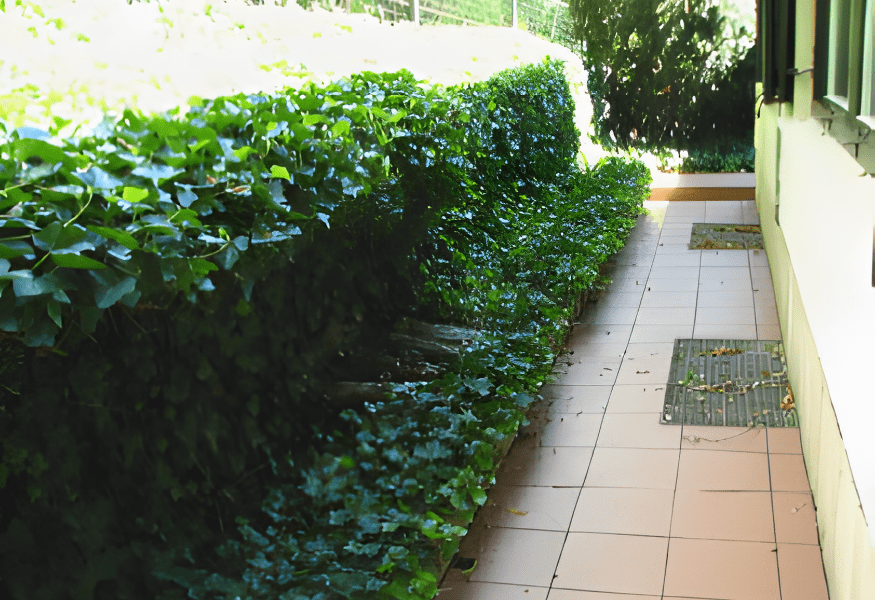
Slika 1. Severna stran hiše brez direktne svetlobe
 .
.
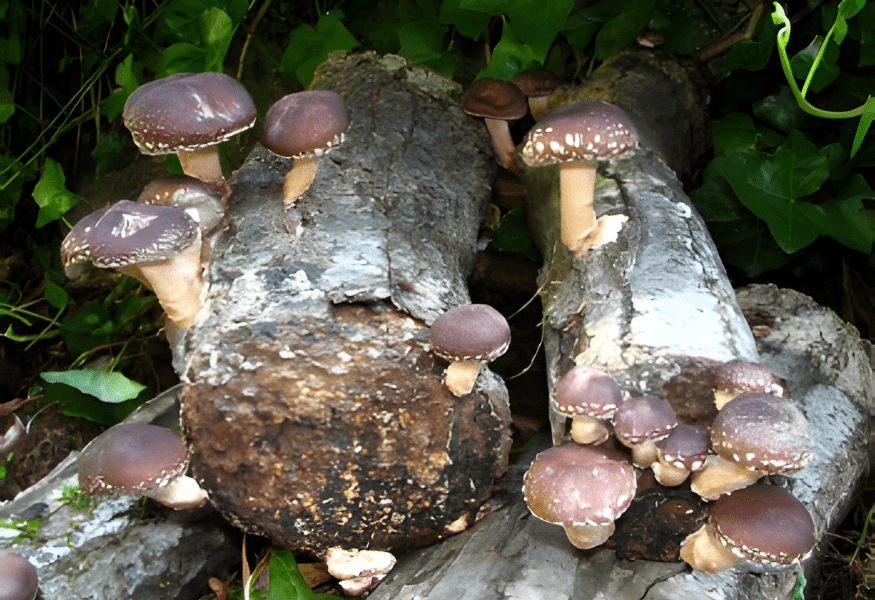
Slika 2. Prvi obrod šitak v senci za hišo
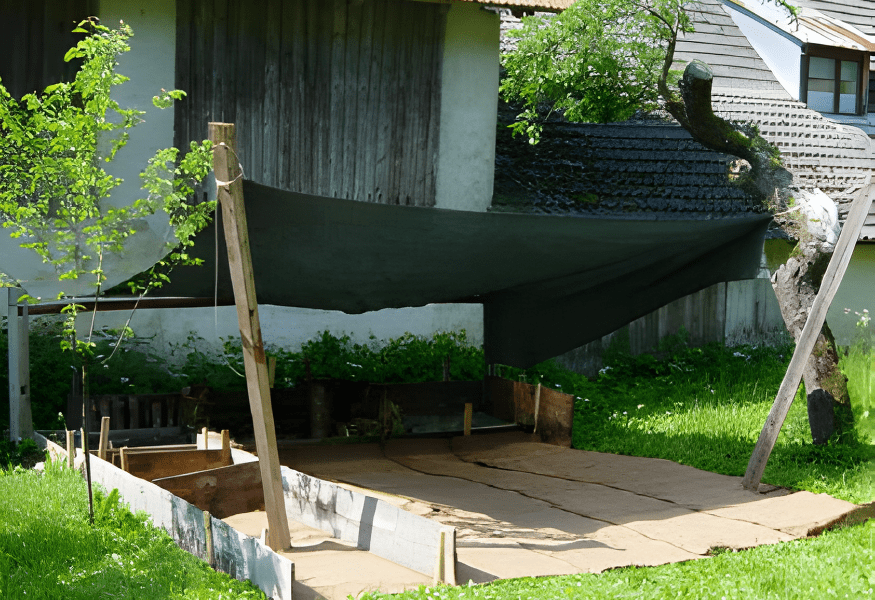
Slika 3. Umetna senca za gojenje gob
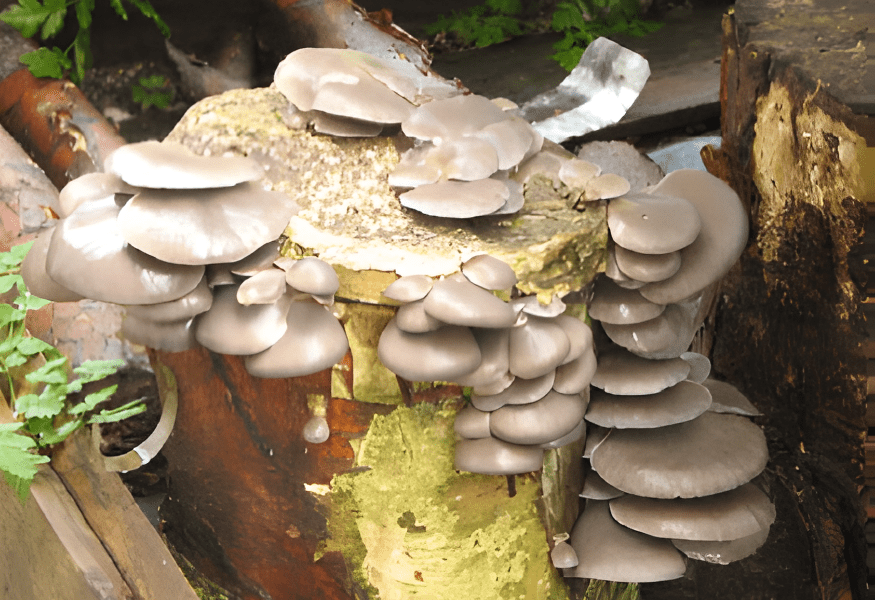
Slika 4. Obrod bukovega ostrigarja pod isto senco
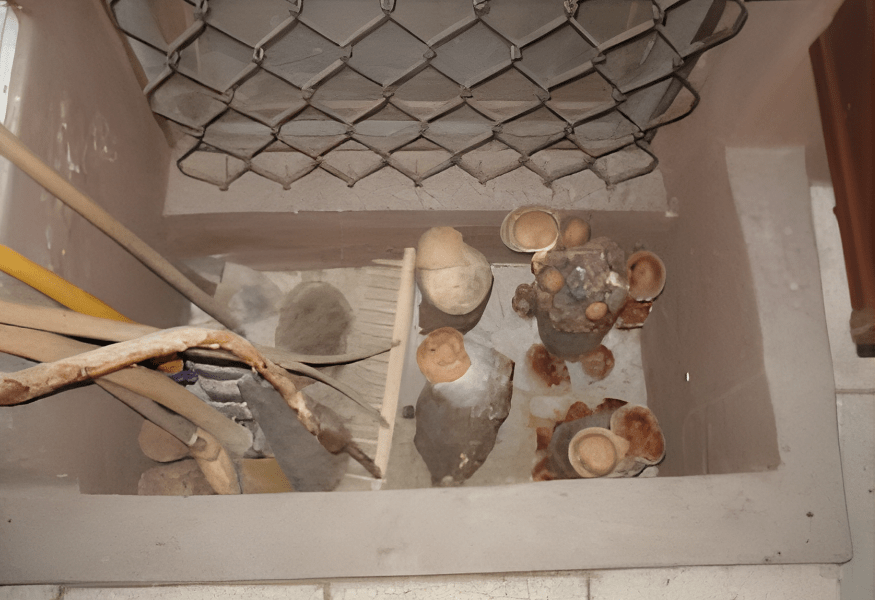
Slika 5. Tudi jašek kletnega okna je primerno mesto za gojenje gob
Indoor Cultivation
Mushrooms can be cultivated indoors in a manner similar to growing potted plants. This approach works particularly well with ready-made mushroom growing kits, while substrates for oyster mushrooms on beech can also be prepared manually from straw. All that is needed is a confined space, which can be created using items such as a large bucket (Figure 8), a shower cabin (Figure 7), and similar setups. Another option is to construct a simple tent from a plastic bag, which provides the kit with sufficient humidity (Figure 9).
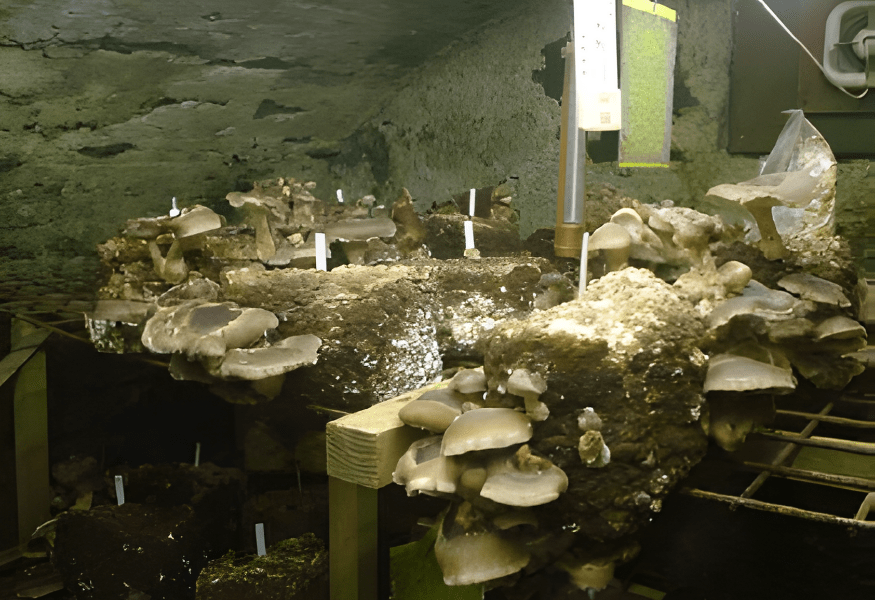
Slika 6 .Prostor za gojenje gob v starejši kleti
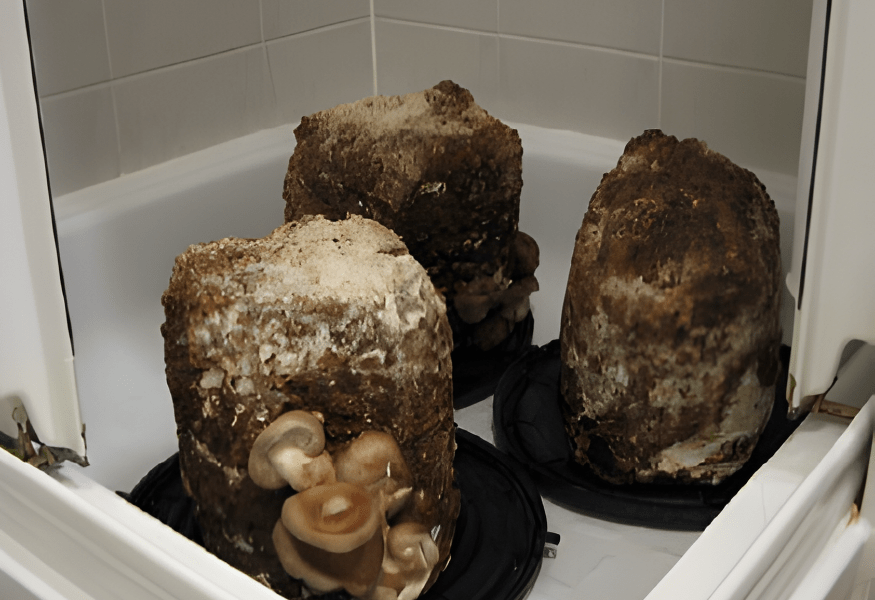
Slika 7. Tudi prha je primeren prostor
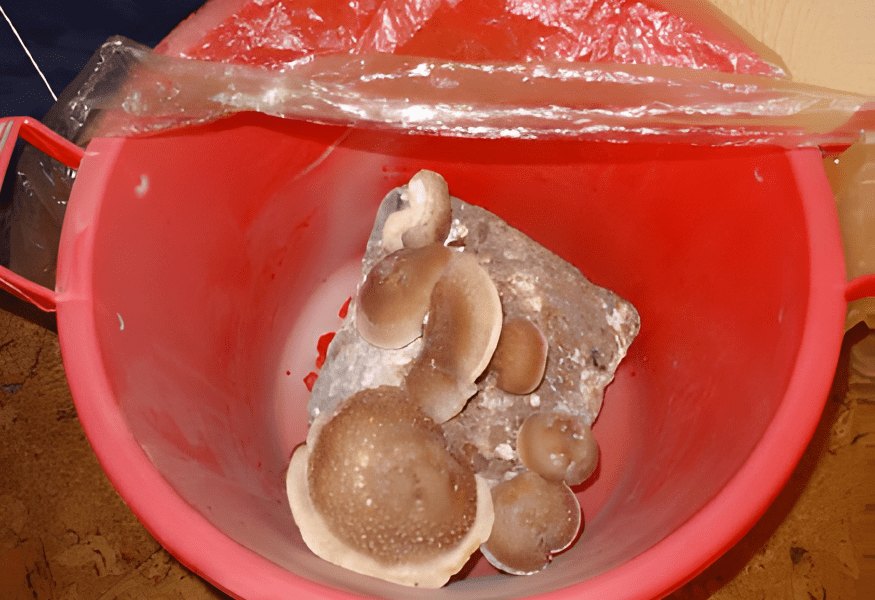
Slika 8. Vedro pokrito s prosojno folijo
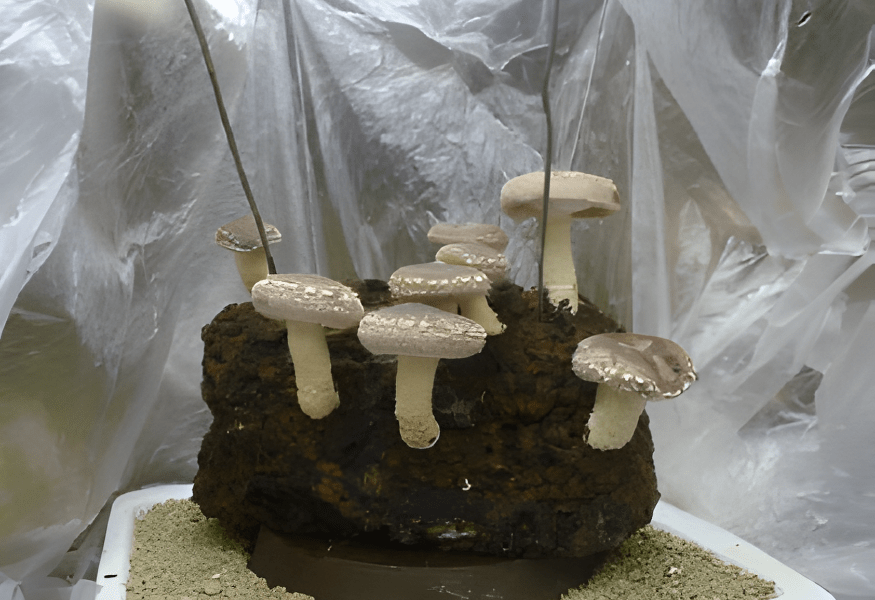
Slika 9. Komplet na vlažnem pesku pod folijo
Larger-Scale Indoor Cultivation
If one wishes to cultivate mushrooms on a larger scale, a cellar, barn, or similar space is most suitable. Shelves can be installed, and mushroom growing kits placed on them (Figure 6). In enclosed spaces, it is important to maintain high relative humidity, which can be achieved through occasional misting. Additionally, provision must be made for gentle lighting and proper ventilation.