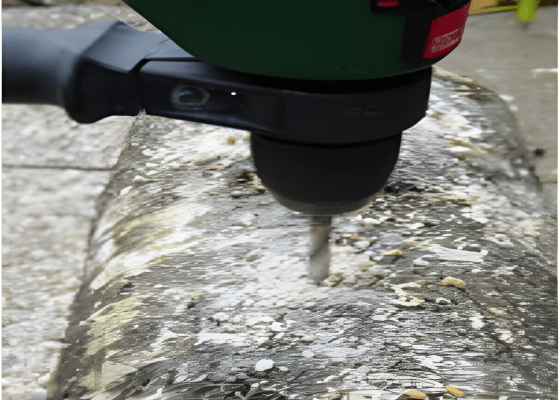

Image 1 Image 2

Sketch 1: Inoculation of a log with mycelium on wooden plugs
Fully insert the plugs into the holes. The required number of plugs is shown in Table 1. Seal the openings of the filled holes with melted paraffin or beeswax (not with grafting resin!). Also coat the ends of the logs to prevent contamination and the loss of sap (Image 3, Image 4).


Image 3 Image 4
Table 1: Number of plugs and holes per log for a 1-meter-long log
|
Log diameter |
6cm |
8cm |
10cm |
12cm |
15cm |
18cm |
21cm |
|
Number of rows |
3 |
4 |
5 |
6 |
7 |
9 |
11 |
|
No. Holes / log |
12 |
16 |
20 |
24 |
28 |
36 |
44 |
Inoculating Wood with Grain Spawn
Cut the logs into shorter pieces (Image 5), and spread a layer of grain-based mycelium and fresh sawdust obtained from cutting the logs over the entire surface (Image 6). Cover everything with cling film to prevent drying out (Image 7, Image 8), and also coat the ends of the logs with wax or paraffin (Sketch 2).
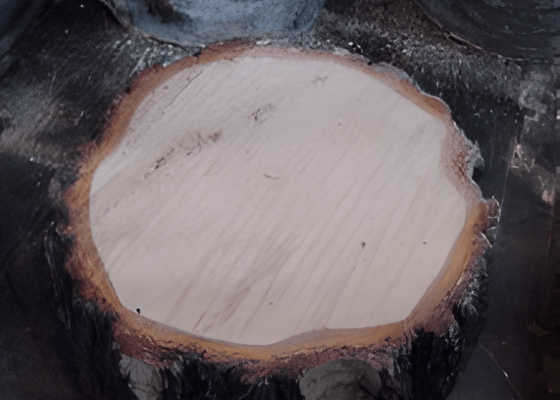

Image 5 Image 6

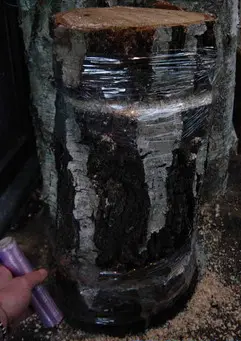

Image 7 Image 8 Sketch 2: Inoculation of a log with mycelium on wheat
Grain-based mycelium can also be spread into V-shaped notches, into which the cut section of the log is then inserted (Image 9). If necessary, secure the cut log piece with a nail or screw and protect it from drying out with cling film or polyethylene (Image 10, Sketch 3).


Image 9 Image 10

Sketch 3: Inoculation of a split log with wheat based mycelium
Place the inoculated logs in a shady spot where they can get rain, but be careful that water does not accumulate in the notches filled with mycelium, as this can cause it to rot. If you notice water collecting under the plastic cover, gently puncture it. It is important that the logs do not dry out, but also that they are not soaked (avoid areas where water pools or strong wind blows). In places where air humidity fluctuates greatly due to sun, wind, and rain, the bark begins to detach from the logs more quickly, allowing other organisms to access the wood (Image 11) and reducing mushroom yields.

Image 11
Shady spots in the garden without direct sunlight are suitable. A sandy substrate is ideal. For the first six months, logs should be placed about 1 cm above the ground to prevent entry by other unwanted organisms. Later, once the mycelium has fully colonized the logs, it is recommended that they come into contact with the ground, as they can draw water from it during dry periods. Outdoors, water the logs during extremely dry weather.
For the colonization phase, moist cellars (above 10 °C) or rooms with smaller fluctuations in temperature and humidity than outdoors are most suitable (Image 12, Image 13). In such spaces, wood colonization can continue through the winter. If mold appears on the logs, the humidity is too high. In that case, it is recommended to increase ventilation or raise the temperature in the room. If the space is too dry, spray the logs with water (Image 14).


Image 12 Image 13 Image 14
The colonization process lasts 9 to 18 months, and even longer for shiitake. The rule during colonization is that the longer the process, the better it is for the mushrooms and their yield. Mycelium can also be applied to stumps. The two most effective methods are as follows:
With wooden plugs containing mycelium
Drill holes around the entire circumference of the stump, insert the wooden plugs colonized with mycelium (Sketch 4), and protect them from drying out. In this case, it is best to use as many plugs as possible. Stumps that are still oozing sap are not suitable for this purpose. If you want to use such a stump, it is best to wait until it dries before inoculating it with mycelium.
With grain-based mycelium
Spread grain-based mycelium over the entire surface of the cut section of the stump. It is recommended to sprinkle a layer of fresh sawdust over the mycelium, place the cut stump section on top (Sketch 5), and then protect the whole assembly from direct sunlight and excessive drying with cling film or polyethylene (Image 15, Image 16).

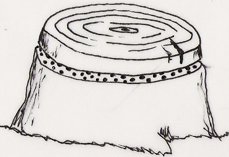
Sketch 4: Log inoculation with spawn plugs Sketch 5: Log inoculation with grain spawn
To prevent drying out, it is recommended to cover the stump with polyethylene and soil (leaves, straw, sand…). Remove the polyethylene and soil after a few months, once the stump is fully colonized, but avoid doing this during dry periods. For this purpose, deciduous stumps that are not oozing sap are best, as excessive sap flow can cause the mycelium to rot.